Fort Lauderdale is named for 1838 Seminole War forts and was incorporated March 27, 1911. Its 18 National Register listings, museums and how to visit.
Last checked Oct. 8, 2026. Sources: the City of Fort Lauderdale’s About Fort Lauderdale and Historic Preservation pages, the National Park Service’s National Register data, and the museums’ own websites. History Fort Lauderdale: 954-463-4431.
Fort Lauderdale takes its name from the Second Seminole War. In 1838, Maj. William Lauderdale led a detachment of Tennessee Volunteers down Florida’s east coast, and a fort named for him was built on the banks of the New River. Three forts carried his name, the city says: the first at the fork of the New River, the second at Tarpon Bend and the largest on the beach where Bahia Mar is now. None survives. The city was incorporated on March 27, 1911.
What this means for you
- Start at the New River downtown: the Stranahan House and History Fort Lauderdale’s museum campus are both by the river.
- The city has three historic districts, 62 locally designated landmarks and 15 National Register sites; changes to them need city historic preservation review.
- Bonnet House on the beach is open Tuesday to Sunday.
How the city began
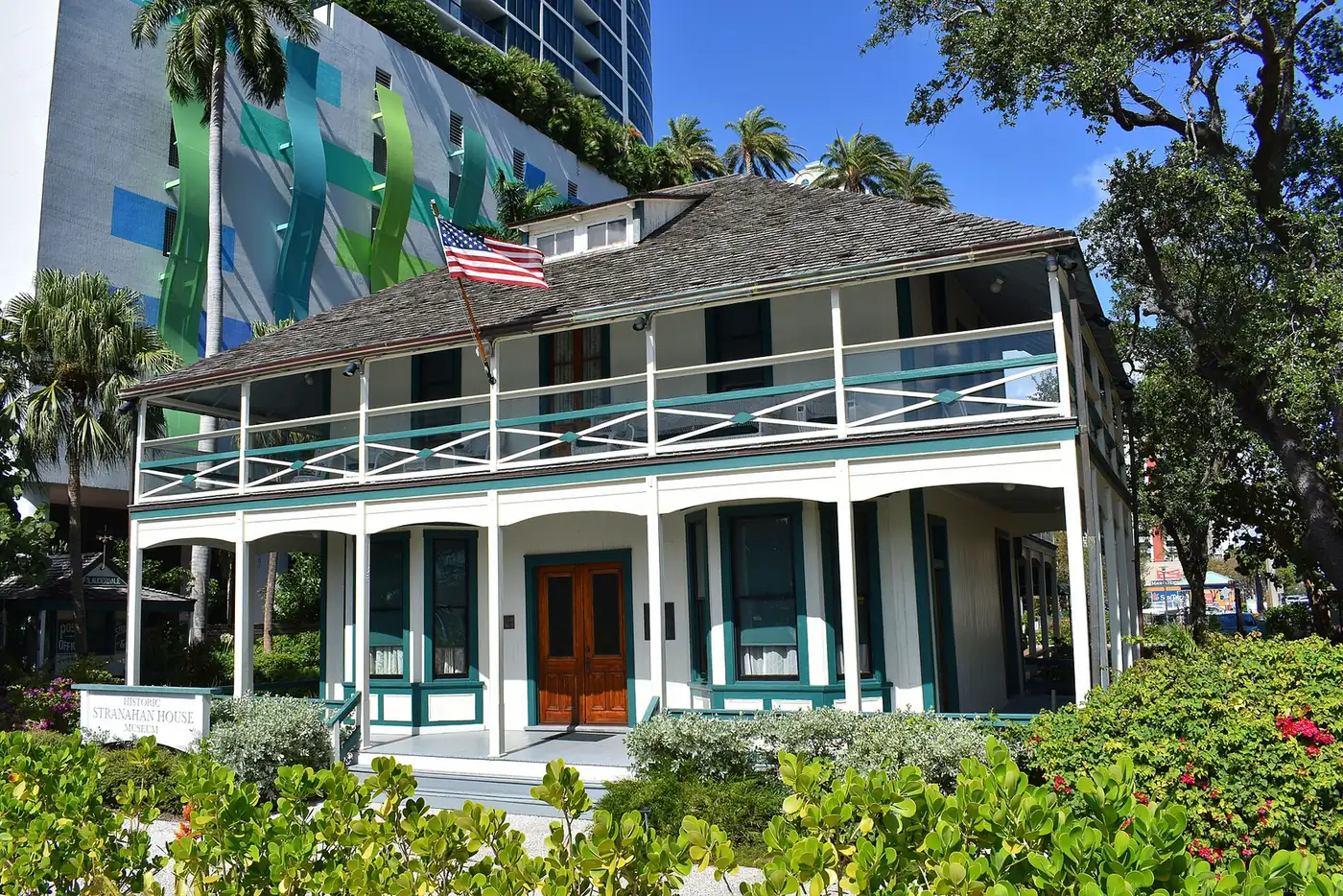
From the Stranahan House Museum’s history: Frank Stranahan, an Ohio native, arrived on the New River in January 1893 to run his cousin’s ferry and camp at Tarpon Bend, and built a trading business with the Seminoles. In 1894 he bought 10 acres farther west on the river, which became the heart of the New River settlement; he was also its postmaster. The railroad arrived in 1896. In 1899 the settlement hired its first schoolteacher, Ivy Julia Cromartie, who married Frank Stranahan on Aug. 16, 1900.
In 1901 Frank Stranahan built the two-story building now called the Stranahan House: a trading post downstairs and a community hall upstairs. After the land boom collapsed in 1926, followed by two hurricanes, the family’s fortunes fell. Ivy Stranahan stayed in the house, served on the city’s planning and zoning committee and remained active in civic life. In 1975 the Fort Lauderdale Historical Society bought the house and, with the Fort Lauderdale Board of Realtors, restored it to its 1915 appearance.
National Register of Historic Places
The National Park Service’s register lists these properties with Fort Lauderdale addresses, with the date each was listed. The city counts 15 National Register sites within its limits; a few addresses below may fall just outside.
| Property | Address | Listed |
|---|---|---|
| New River Inn | 229 SW 2nd Ave. | June 19, 1972 |
| Stranahan House | 335 SE 6th Ave. | Oct. 2, 1973 |
| U.S. Car No. 1 | 3398 SW 9th Ave. | Aug. 24, 1977 |
| Bonnet House | 900 N. Birch Road | July 5, 1984 |
| Old Dillard High School | 1001 NW 4th St. | Feb. 20, 1991 |
| St. Anthony School | 820 NE 3rd St. | Sept. 26, 1997 |
| Bryan Building | 220-230 Brickell Ave. | Oct. 30, 1997 |
| Link Trainer Building | 4050 SW 14th Ave. | May 20, 1998 |
| Sam Gilliam House | 11 SW 15th St. | March 29, 2001 |
| Croissant Park Administration Building | 1421 S. Andrews Ave. | July 25, 2001 |
| Williams House | 119 Rose Drive | Sept. 28, 2005 |
| Dr. Willard Van Orsdel King House | 1336 Seabreeze Blvd. | Feb. 21, 2006 |
| South Side School | 701 S. Andrews Ave. | July 19, 2006 |
| Alfred and Olive Thorpe Lustron House | 1001 NE 2nd St. | Nov. 1, 2007 |
| Old West Side Grade School | 301 Harmon Ave. | Sept. 19, 2012 |
| North Woodlawn Cemetery | 1936 NW 9th St. | Nov. 29, 2017 |
| Fort Lauderdale Woman’s Club | 20 S. Andrews Ave. | Feb. 4, 2019 |
| Rivermont | Address restricted | April 20, 2022 |
Most of these are private homes or working buildings; view them from the street unless they are open to the public. The city’s interactive historic landmarks map shows local landmarks too.
Museums and places to visit
| Place | Address | Hours, as published |
|---|---|---|
| History Fort Lauderdale museum campus (the historical society) | 231 SW 2nd Ave. | 10 a.m. to 4 p.m. daily; 954-463-4431 |
| Stranahan House Museum | 335 SE 6th Ave. | Tours five or six days a week; last tour accepted at 3:15 p.m.; book ahead |
| Bonnet House Museum and Gardens | 900 N. Birch Road | Self-guided tours 11 a.m. to 4 p.m. Tuesday to Sunday; closed Mondays, holidays and for the Fort Lauderdale Air Show |
| Old Dillard Museum | 1009 NW 4th St. | Check with Broward County Public Schools |
History Fort Lauderdale also runs a historical walking tour and group tours. The Stranahan House suggests arriving by water taxi to skip downtown parking.
Historic districts
The city has three historic districts, including the Sailboat Bend Historic District, where the city is working on a vision plan. Work on a designated landmark or inside a historic district needs review by the city’s Historic Preservation Board liaison, and alterations, additions or new construction need a Certificate of Appropriateness. See building permits and zoning.
Related: population and growth and parks and trails.
Frequently asked questions
How did Fort Lauderdale get its name?
The city is named for a Second Seminole War fort built on the New River in 1838 by troops under Maj. William Lauderdale. Three forts bore his name; none survives.
When was Fort Lauderdale incorporated?
Fort Lauderdale was incorporated on March 27, 1911, the city says.
What is the oldest building in Fort Lauderdale?
The Stranahan House Museum describes itself as Fort Lauderdale’s oldest surviving structure. Frank Stranahan built it on the New River in 1901 as a trading post with a community hall upstairs.
How many National Register of Historic Places listings are in Fort Lauderdale?
The National Park Service’s register lists 18 properties with Fort Lauderdale addresses, from the New River Inn, listed in 1972, to Rivermont, listed in 2022. The city counts 15 inside city limits.
What history museums are in Fort Lauderdale?
History Fort Lauderdale runs a museum campus at 231 SW 2nd Ave., open daily 10 a.m. to 4 p.m.; the Stranahan House Museum offers tours most days; and Bonnet House is open for self-guided tours 11 a.m. to 4 p.m. Tuesday to Sunday.
Have your say